The Bureau of Investigative Journalism - Uyghur – Made In China
Some projects ask us to create a visual world. Others ask us to find a visual language for a reality that is difficult to look at.
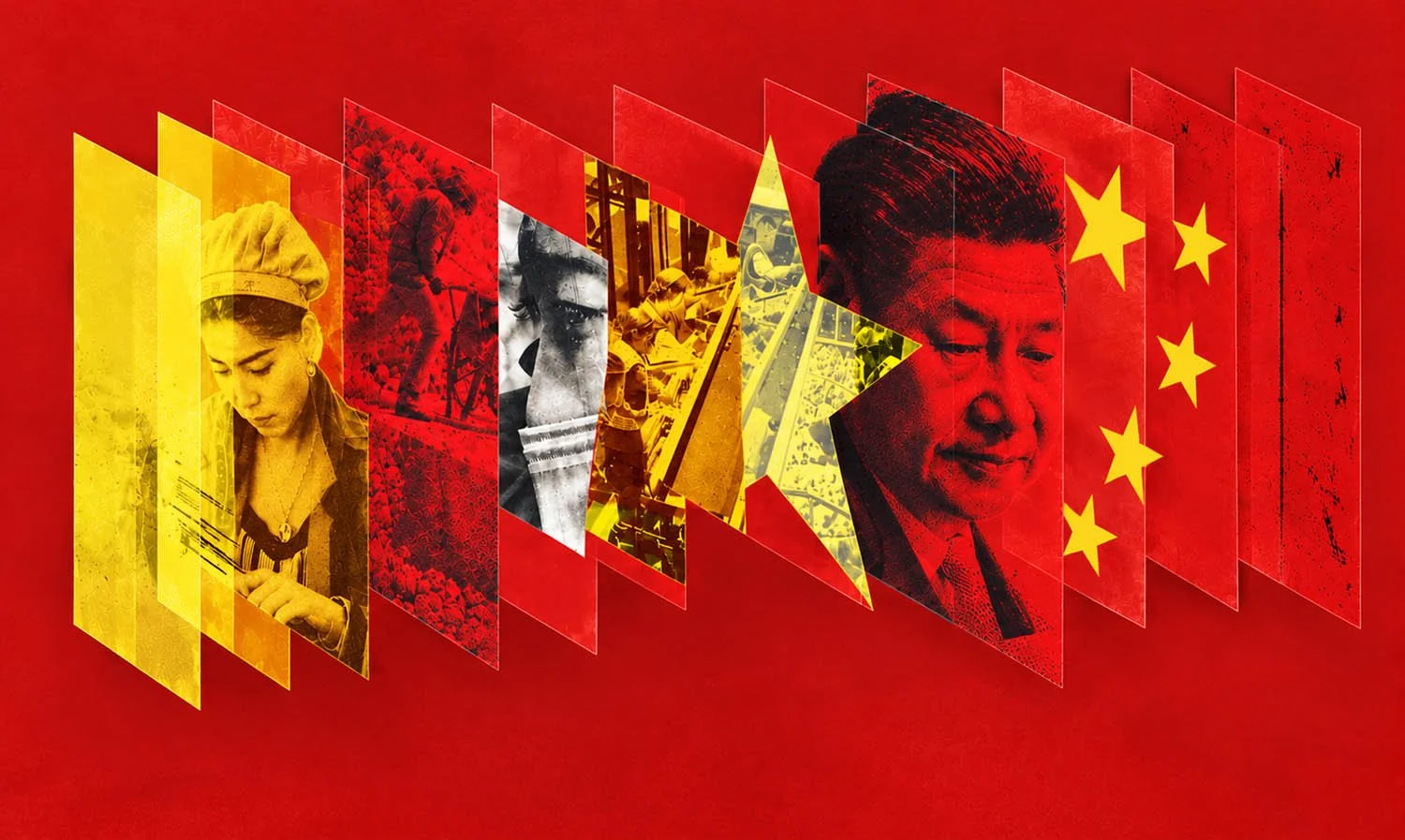
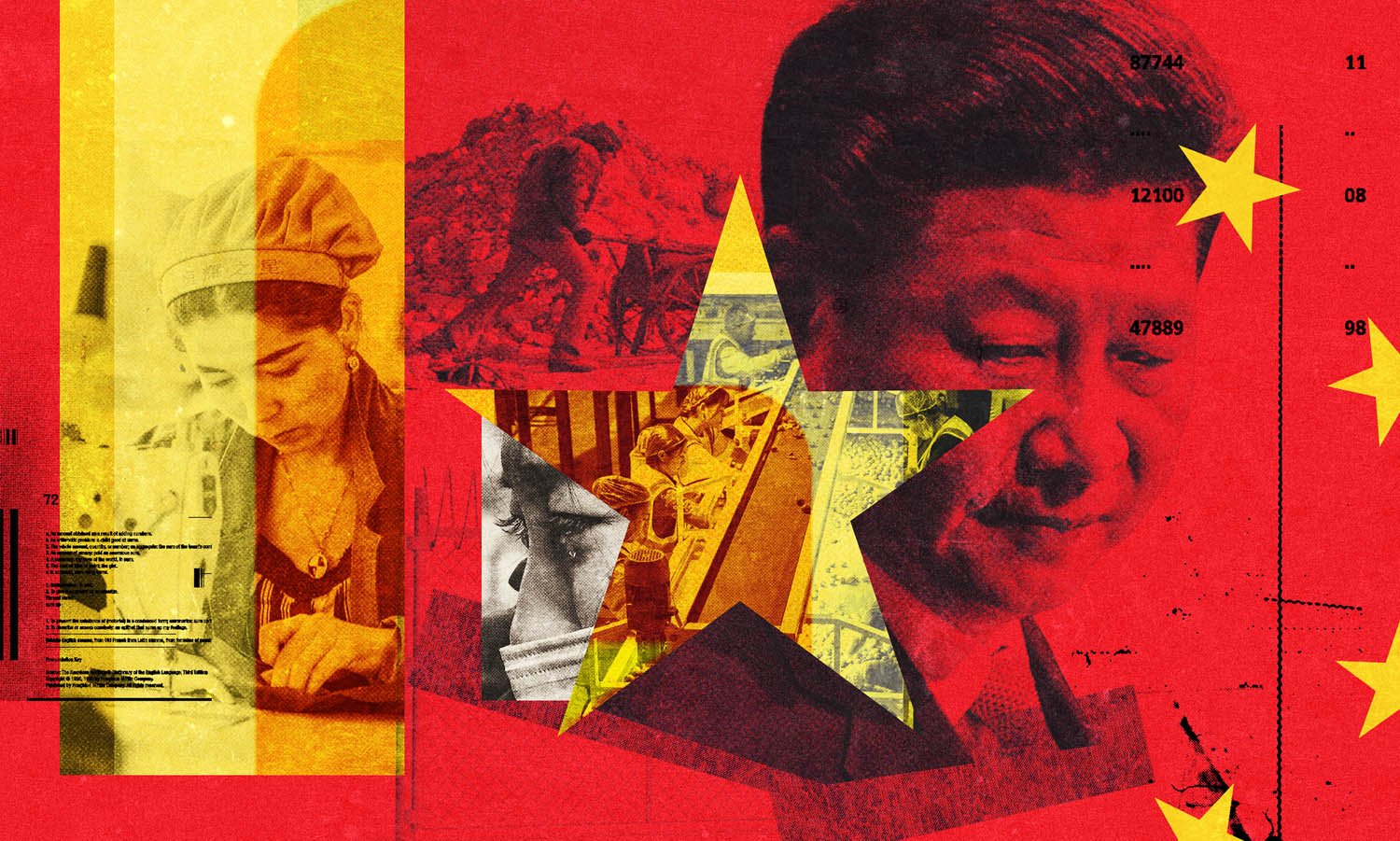
For The Bureau of Investigative Journalism, we created a series of editorial collages for an investigation into Uyghur forced labour and the wider system connecting workers, factories, political power and global supply chains.
From the beginning, we approached the illustrations as one visual story rather than a collection of separate images. We needed to find a language that could move between the different layers of the investigation while keeping the people at its centre.
We built that language around power, control and labour.
Red and yellow became the foundation of the palette, referencing the Chinese flag and creating a visual thread across the project. Its stars became another recurring element, sometimes immediately recognisable, sometimes obscured, cropped or used to hold photographic fragments within them. Sepia toned imagery introduced a quieter layer and helped us connect photographs coming from different sources and moments.
Within this system, we worked with images of factory workers, seamstresses, physical labour, faces and gestures. We were interested in the contrast between the enormous structures surrounding these people and the very individual human experiences inside them.
That balance shaped the whole project.
We wanted the illustrations to communicate the scale and pressure revealed by the investigation without losing sight of the people experiencing it. Symbolism helped us connect those different layers, but we were careful not to let it become too literal or turn a difficult reality into an aesthetic exercise.
So, throughout the project we kept returning to the same question: how much does an image need to say?
Sometimes the answer was a strong graphic symbol. Sometimes a fragment of a photograph. Sometimes a face, a gesture or a detail was enough.
Together, those elements became a visual system that could hold different parts of the investigation while still feeling like one story.
For us, that was the most important part of this project: finding a way for the visuals to have a voice, while always leaving space for the people and the journalism behind them.